
Introduction
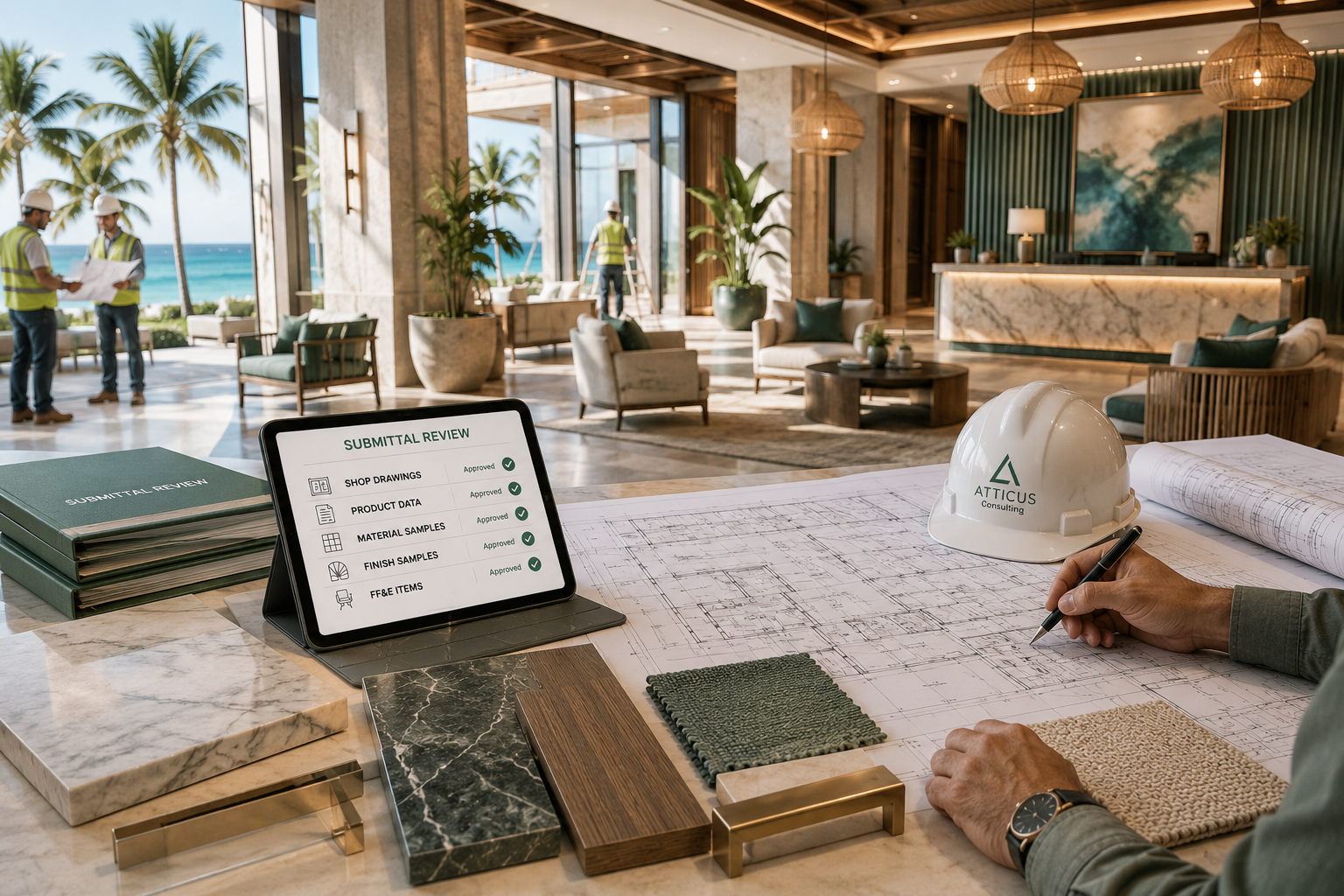
Construction Submittals play a critical role in the successful delivery of luxury hospitality projects. From custom guestroom furniture and decorative lighting to specialty finishes and branded design standards, every project component must be reviewed and approved before it is procured, manufactured, or installed.
While often viewed as an administrative requirement, construction submittals serve as an essential quality-control and risk-management tool. They help architects, designers, contractors, procurement teams, and owners verify that proposed products, materials, and systems align with project specifications and design intent before committing significant project resources.
For luxury hospitality developments, effective submittal management helps protect project schedules, improve coordination, and reduce costly mistakes. Delays involving custom millwork, FF&E packages, lighting fixtures, or specialty equipment can affect procurement timelines, shipping schedules, installation sequencing, and ultimately hotel opening dates.
The importance of construction submittals is even greater throughout the Caribbean, where projects often rely on imported materials, international suppliers, and long-lead procurement.
When managed effectively, construction submittals help align design intent with project execution while supporting communication, procurement planning, and construction coordination. This article explores why they matter, how they support successful hospitality project delivery, and what project teams can do to manage them more effectively.
What Are Construction Submittals?
Construction Submittals are documents, drawings, samples, and technical information submitted by contractors, subcontractors, suppliers, or manufacturers for review before products are procured, fabricated, or installed. Their purpose is to verify that proposed materials, equipment, and systems comply with project specifications and design requirements.
Think of construction submittals as a quality-control checkpoint that allows project teams to identify issues before significant time and money are invested. Rather than discovering a problem after products arrive on-site, stakeholders can review and approve proposed solutions during the planning and procurement stages.
Common types of construction submittals include:
- Shop drawings
- Product data sheets
- Material and finish samples
- Mockups
- Equipment specifications
- Manufacturer certifications
In luxury hospitality projects, construction submittals are particularly important because many products are custom-designed, sourced internationally, or required to meet strict brand standards. A guestroom furniture package, decorative lighting system, or custom millwork installation may require multiple levels of review before procurement can proceed.
For owners and developers, construction submittals provide confidence that approved products align with project goals, operational requirements, and quality expectations before they become part of the finished hospitality environment.
Why Construction Submittals Are Critical to Project Success
Construction Submittals are one of the most effective tools for reducing project risk and maintaining quality throughout the construction process. By reviewing products and materials before procurement or installation, project teams can identify issues early and avoid costly mistakes later.
For luxury hospitality developments, this level of control is essential. Hotels and resorts often include custom furniture, decorative lighting, specialty finishes, and branded design elements that require careful review before manufacturing begins. A single approval error can lead to procurement delays, budget impacts, or rework that affects multiple project milestones.
Construction submittals also play a significant role in protecting project schedules. Many long-lead items cannot move into production until submittals are approved. Delays in reviewing shop drawings, finish samples, or product specifications can affect manufacturing, shipping, and installation timelines.
Beyond schedule management, submittals improve communication among owners, designers, consultants, contractors, and procurement teams. They provide a structured review process that helps stakeholders make informed decisions and maintain alignment throughout the project lifecycle.
For owners and developers, Construction Submittals provide visibility into what is being supplied and installed before significant financial commitments are made. When managed effectively, they support quality assurance, procurement planning, and successful project delivery. These principles align closely with the project management best practices promoted by the Construction Management Association of America (CMAA), making Construction Submittals a critical component of hospitality project management.
Common Types of Construction Submittals
Not all Construction Submittals serve the same purpose. Different submittal types help project teams verify products, materials, and systems before procurement and installation begin.
One of the most common submittals is the shop drawing, which provides detailed information about how a product will be fabricated and installed. Shop drawings are frequently used for custom millwork, guestroom furniture, decorative lighting, and specialty architectural features.
Product data submittals contain manufacturer specifications, dimensions, performance information, and technical requirements. These documents help architects, designers, and consultants confirm that selected products meet project requirements.
Material and finish samples allow stakeholders to evaluate the appearance and quality of proposed materials before approval. In luxury hospitality projects, samples often include fabrics, wood veneers, stone finishes, carpet selections, and decorative metals that contribute to the guest experience.
Many hospitality developments also utilize mockups or prototype rooms. These full-scale representations help owners, operators, and design teams assess functionality, aesthetics, and brand compliance before large-scale procurement begins.
Finally, equipment submittals provide technical information for systems such as HVAC equipment, kitchen appliances, elevators, and building automation systems.
Together, these Construction Submittals help ensure that approved products align with design intent, operational requirements, and quality expectations before they become part of the finished project.
Understanding the Construction Submittal Process
The Construction Submittal Process provides a structured workflow for reviewing and approving products, materials, and systems before procurement, fabrication, or installation begins. While the exact process may vary by project, the goal remains the same: ensuring that proposed solutions align with project specifications and design intent.
The process typically begins when a contractor, supplier, or manufacturer prepares and submits documentation such as shop drawings, product data sheets, samples, or technical specifications.
The contractor then reviews the submission for completeness before forwarding it to the design team. Architects, engineers, interior designers, and consultants evaluate the information to verify compliance with project requirements and identify any issues that may require clarification or revision.
Depending on the project, additional reviews may be required from ownership groups, hotel operators, or brand representatives. This is particularly common in luxury hospitality developments where brand standards and operational requirements influence approval decisions.
Once the review is complete, the submittal is typically approved, approved with comments, or returned for revision and resubmission. Approved submittals then serve as authorization for procurement, fabrication, or installation activities.
A well-managed Construction Submittal Process helps project teams maintain quality control, improve communication, and reduce delays. For hospitality projects, it also supports procurement planning and helps keep long-lead items aligned with critical project milestones.
Construction Submittals vs RFIs: Understanding the Difference
Construction Submittals and Requests for Information (RFIs) are both essential components of construction documentation, but they serve different purposes.
A Construction Submittal is used to obtain approval for a proposed product, material, system, or piece of equipment before procurement or installation can proceed. Its purpose is to demonstrate compliance with project specifications and design requirements.
An RFI, on the other hand, is used to request clarification when project documents contain missing, conflicting, or unclear information. Rather than seeking approval, an RFI helps project teams obtain the information needed to move work forward.
In simple terms:
- Construction Submittals seek approval.
- RFIs seek clarification.
The two processes often work together. For example, a contractor may issue an RFI to clarify conflicting dimensions shown in the drawings before preparing shop drawings for a custom millwork package. Once the clarification is received, the contractor can submit the finalized documentation for approval through the submittal process.
Understanding the difference helps reduce confusion, avoid unnecessary review cycles, and improve project coordination.
For a deeper understanding of RFIs and their role in project communication, read Atticus Consulting’s guide to RFI in Construction Project Management:
When managed effectively, both RFIs and Construction Submittals contribute to better communication, stronger coordination, and more successful project outcomes.
How Construction Submittals Impact FF&E Procurement
Construction Submittals play a critical role in FF&E procurement because many purchasing and manufacturing activities cannot begin until required approvals are received. For luxury hospitality projects, where custom furniture, decorative lighting, specialty finishes, and operating equipment are common, submittal management directly influences procurement performance.
Manufacturers often require approved shop drawings, finish selections, material samples, and product specifications before production can begin. As a result, delays in the submittal review process can affect manufacturing schedules, shipping timelines, and installation activities.
This becomes particularly important for long-lead items such as:
- Custom guestroom furniture
- Decorative lighting packages
- Architectural millwork
- Commercial kitchen equipment
- Spa and wellness products
A delayed approval may seem minor, but it can create a ripple effect throughout the project lifecycle. Manufacturing may start later than planned, shipping schedules may shift, and installation activities may need to be rescheduled. In hospitality developments operating under fixed opening dates, these delays can have significant consequences.
Successful project teams integrate Construction Submittals into their procurement planning process from the beginning. By coordinating submittal schedules with procurement milestones, stakeholders gain greater visibility into potential risks and can prioritize approvals that have the greatest impact on project delivery.
For owners and developers, effective submittal management helps protect procurement schedules, reduce project risk, and support successful hospitality project outcomes.
Common Construction Submittal Mistakes That Cause Delays
Even well-planned projects can experience delays when Construction Submittals are not managed effectively. In luxury hospitality developments, where multiple stakeholders and long-lead procurement packages are involved, small documentation issues can quickly become major project challenges.
One of the most common mistakes is delaying submittals for long-lead items such as custom furniture, decorative lighting, and specialty millwork. Because these products often require extended manufacturing periods, late approvals can significantly affect procurement and installation schedules.
Another frequent issue is submitting incomplete documentation. Missing product data, unclear shop drawings, or incomplete finish selections often result in additional review cycles and avoidable delays.
Poor coordination between project stakeholders can also create problems. Hospitality projects typically involve owners, operators, architects, designers, contractors, and procurement teams. When responsibilities and review timelines are not clearly defined, approvals can become bottlenecked.
Many teams also underestimate the importance of tracking and documentation control. Without a centralized system for monitoring approvals, revisions, and outstanding reviews, project teams may lose visibility into critical procurement dependencies.
The most successful hospitality projects treat Construction Submittals as a project-management tool rather than an administrative task. By prioritizing long-lead items, improving communication, and maintaining organized documentation, teams can reduce risk, improve coordination, and help keep projects on schedule.
Caribbean Project Considerations: Managing Construction Submittals Across Island Developments
Construction Submittals become even more important when managing hospitality projects throughout the Caribbean. Unlike many mainland developments, island projects often depend on imported materials, international suppliers, and complex logistics networks, leaving little room for error.
Many hospitality developments rely on products sourced from multiple regions, including custom furniture, decorative lighting, specialty finishes, and commercial equipment. Before these items can be manufactured or shipped, the required submittals must be reviewed and approved.
Delays in the approval process can affect more than procurement schedules. They may also impact shipping arrangements, customs clearance, warehousing coordination, and installation sequencing. Because replacement products are not always readily available, correcting mistakes after procurement can be both costly and time-consuming.
Caribbean projects frequently involve coordination among owners, operators, designers, procurement teams, contractors, and international suppliers. Construction Submittals provide a structured review process that helps stakeholders align decisions before products move into production or shipment.
To reduce risk, project teams should prioritize long-lead items, establish clear approval timelines, and maintain centralized documentation throughout the project lifecycle. This proactive approach improves visibility, strengthens coordination, and supports successful project delivery.
For hospitality developments where logistics, procurement, and construction activities are closely connected, effective submittal management can play a significant role in protecting both project schedules and opening dates.
Best Practices for Managing Construction Submittals
Effective Construction Submittal management begins with planning. Rather than treating submittals as individual tasks, successful project teams develop a clear review strategy that aligns with procurement schedules, construction milestones, and project objectives.
One of the most important best practices is identifying long-lead items early. Products such as custom FF&E, decorative lighting, specialty millwork, and commercial equipment often require extended manufacturing and shipping timelines. Prioritizing these submittals helps reduce procurement risk and protect critical project deadlines.
Clear communication is equally important. Project teams should establish defined review responsibilities and approval timelines for owners, designers, consultants, contractors, and procurement professionals. This helps prevent bottlenecks and improves accountability throughout the process.
Maintaining a centralized submittal log also provides valuable visibility into review status, pending approvals, and procurement dependencies. With accurate tracking, teams can identify potential issues before they affect manufacturing, delivery, or installation activities.
Finally, Construction Submittals should be viewed as a project-control tool rather than an administrative requirement. When integrated with procurement planning and project management processes, they help improve coordination, reduce risk, and support informed decision-making.
For luxury hospitality developments, a disciplined submittal process can play a significant role in maintaining quality standards, protecting schedules, and supporting successful project delivery.
Frequently Asked Questions About Construction Submittals
What Is a Submittal in Construction?
A construction submittal is a document, drawing, sample, or technical specification submitted for review before products or materials are procured, fabricated, or installed. Its purpose is to verify compliance with project specifications and design requirements.
What Is the Difference Between a Construction Submittal and an RFI?
Construction Submittals are used to obtain approval for products, materials, or systems, while RFIs (Requests for Information) are used to obtain clarification regarding project documents or design intent. In simple terms, submittals seek approval, while RFIs seek information.
Why Are Construction Submittals Important?
Construction Submittals help reduce project risk by identifying issues before procurement and installation begin. They support quality control, improve stakeholder communication, and help keep construction and procurement activities aligned with project schedules.
Who Reviews Construction Submittals?
Depending on the project, submittals may be reviewed by architects, engineers, interior designers, contractors, owners, hotel operators, brand representatives, and procurement consultants. Review requirements vary based on the product and project scope.
How Do Construction Submittals Affect FF&E Procurement?
Many FF&E manufacturers require approved shop drawings, finish selections, and product specifications before production can begin. Delayed approvals can impact manufacturing schedules, shipping timelines, installation activities, and hotel opening dates.
Conclusion
Construction Submittals are much more than a documentation requirement. They are a critical project-management tool that helps reduce risk, support procurement planning, improve stakeholder coordination, and maintain quality throughout the construction process.
For luxury hospitality developments, effective submittal management is especially important because projects often involve custom FF&E packages, international suppliers, branded design standards, and long-lead procurement items. Delays in the review and approval process can impact manufacturing schedules, shipping timelines, installation activities, and ultimately project completion dates.
By establishing clear review procedures, prioritizing critical procurement packages, and maintaining accurate documentation, project teams can improve visibility, strengthen coordination, and better manage project risks. These practices are particularly valuable throughout the Caribbean, where hospitality developments frequently rely on imported materials and complex logistics networks.
Atticus Consulting supports hotel owners, developers, investors, and project teams throughout the Caribbean with expertise in construction document management, FF&E procurement, project management, and owner’s representation. By aligning design, procurement, and construction activities, Atticus helps stakeholders deliver hospitality projects more efficiently while protecting quality, schedule, and budget objectives.
If you’re planning a hospitality development or seeking stronger project controls, contact Atticus Consulting to learn how strategic project oversight can support your project’s success.